One needs to examine the pros and cons of thyristor vs IGBT rectifiers to determine the ideal choice for green hydrogen production. EPC firms, consultants and advisors are debating the question, which touches reliability, efficiency, quality, operability, overall cost, environment, access to technology, after-sales support and dependency.
Statcon Energiaa designs and manufactures static power converters, including rectifiers from a few hundred kW to a few thousand kW. Three technologies are in contention:
- Type 1 — Thyristor (SCR) controlled rectifier: the oldest technology, still used in high-current converters.
- Type 2 — Diode rectifier with IGBT chopper: high-current diodes followed by many smaller, non-isolated IGBT buck choppers in parallel.
- Type 3 — IGBT-based active front end (AFE): smaller-current three-phase IGBT converters in parallel, followed by many small buck choppers.
Thyristor rectifiers are criticised as bulky and slow in transient response, and for generating high input line current harmonics at a lower power factor. These issues were ignored until green hydrogen requirements demanded compliance.
1. The technology
A thyristor rectifier uses a simple power and control circuit; Type 2 is complex and Type 3 very complicated. Type 1 may not need air-conditioning, while the others will.
Diode + IGBT units (20–110 V, a few thousand amps) do not by themselves improve line power quality. A key concern is delivering 100% DC output at ambient temperatures up to 50 °C on dusty sites. Check whether the rated output is held up to 50 °C or derated from 40 °C.
2. Use of bulky transformers and other magnetics
Types 1 and 2 need a full-capacity input transformer for galvanic isolation and voltage matching; Type 3 may not. The transformer provides human safety and surge immunity.
Modern practice uses medium voltage (MV) transformers to avoid double conversion, cutting cost and raising efficiency. These are usually oil-cooled and outdoor.
3. Input line current harmonics and power factor
Types 1 and 2 have these issues; Type 3 performs well. Pulse configurations (6, 12 and 24 pulse) help but may not be enough. New techniques can address both harmonics and power factor at MV level for Types 1 and 2.
4. Power semiconductor topologies, control, reliability, maintainability and after-sales support
A thyristor converter uses one large bridge with very large devices, which can be paralleled. IGBT units must parallel many modules because of device rating limits.
Types 2 and 3 run on manufacturer-specific, complex software, and only a failed module can be replaced, by sending it to a service centre. Check service availability before buying.
5. Efficiency, ripple, regulation, transient response and current regulation
Ideal AC-DC efficiency would be 100%. Overall efficiency = transformer peak efficiency × converter peak efficiency = 99% × 98.5% = 97.5%. In practice a peak efficiency of 95% should be assumed; AFE may reach about 96%. Rating the transformer at 120% of the required power keeps it operating near peak efficiency and extends its life.
- Ripple (RMS/average DC): best in Types 2 and 3; electrolyser makers typically specify about 5%.
- Regulation: very good in Types 2 and 3, and about 1% for thyristor, which meets the electrolyser's 1% requirement.
- Transient response: excellent in Types 2 and 3 and relatively poor in Type 1, but still adequate for electrolysers.
- Current regulation response: good in Types 2 and 3 and slower (milliseconds) in thyristor, which is acceptable.
6. Control, safety and protection, operation, remote monitoring and control
All three types use DSP-based control and PLC systems with HMI, so none has a clear advantage. Manufacturers differ in optional extras, which users should pay for only if needed.
7. Environment, cooling and mechanical design
Dust, poor air quality and high ambient temperatures, especially near MW-scale solar plants, need attention. Running air-conditioning 24x7 is debatable on cost. Forced-air cooling is preferred for reliability; water cooling adds chillers, DM water and pumps. Hot-spot risk must be managed.
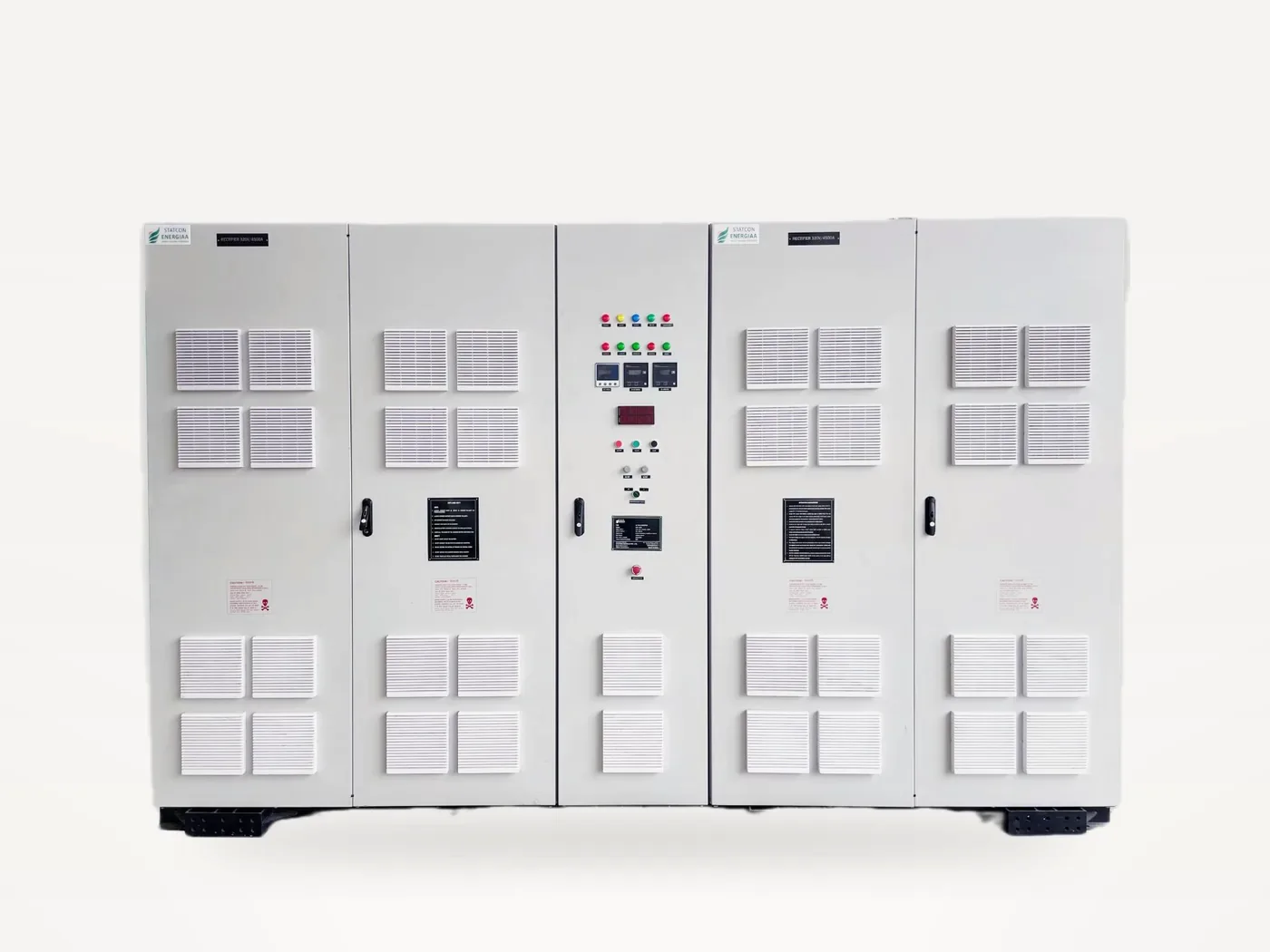
- Free-standing indoor panels: need a room, air flow and civil work.
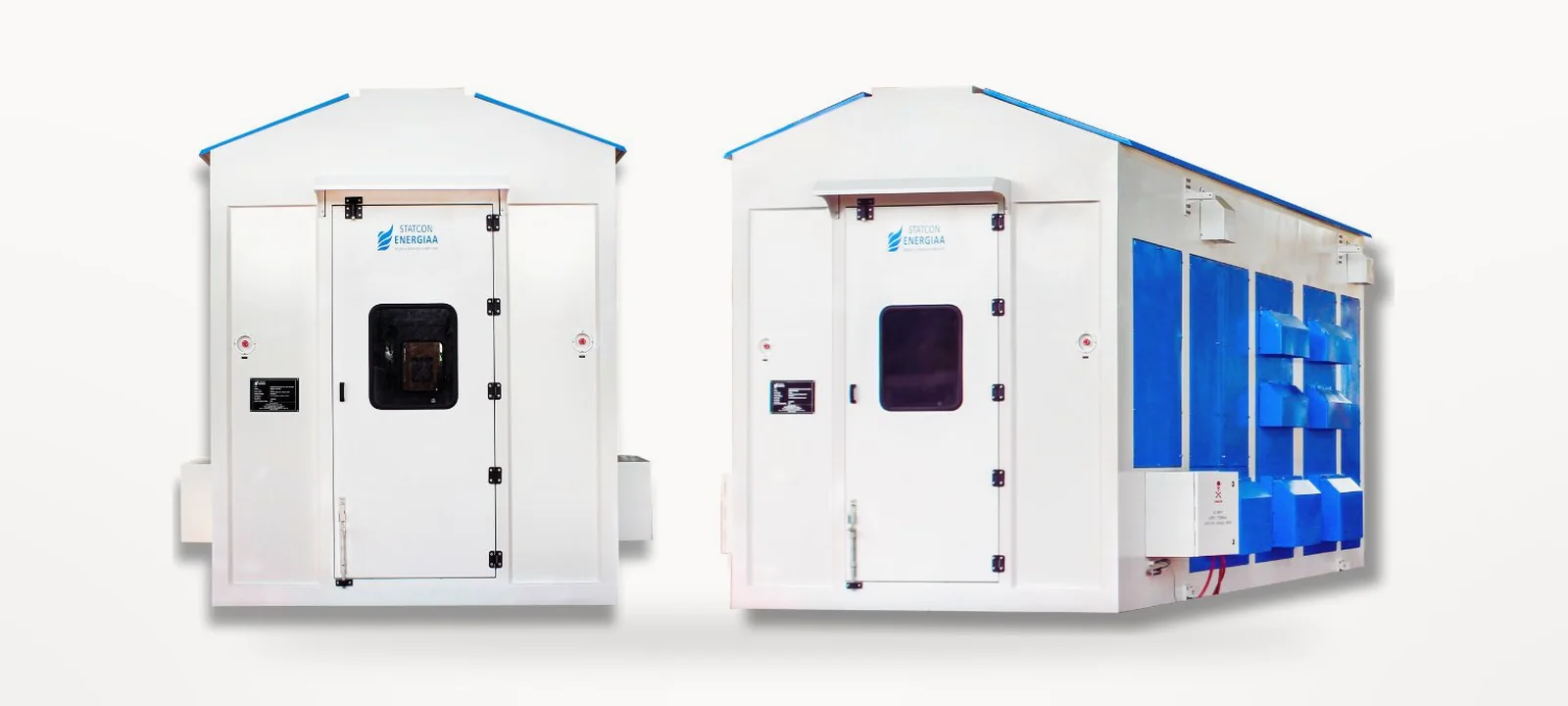
- Outdoor containers: no civil work and easy cabling; a simple tin shed is recommended, with separate air-conditioners on a need basis.
8. Number of MV transformers and MV switchgear
Types 1 and 2 need isolation transformers and 12- or 24-pulse arrangements, which add MV feeders, switchgear and project cost. Verify the cost of transformers, feeders, breakers, switchgear and busbars.
9. Type 3 footprint and track record
Type 3 occupies less space, but it is recent, with no extensive track record of high-voltage, high-current units over 4–5 years in such environments. It requires an oil-cooled outdoor MV transformer.
10. Standards, certifications and past performance
Hydrogen rectifiers are new in India, though low-voltage, high-current thyristor rectifiers have been in use for decades. Relevant standards:
- IEC 60146 (mainly for thyristor converters)
- IEEE 519-2014 (input harmonics)
- UL (mostly in the USA)
EMI/EMC and environmental standards are under discussion. India lacks certification laboratories and a certifying authority, though large power-sector PSUs and EPCs procure third-party validation. Ask for type-test certificates from an accredited laboratory.
11. Service life, reliability, safety, after-sales support and maintenance
Thyristors are rugged and reliable, switching at 50 Hz. IGBTs use high-frequency switching, complex controllers and compact PCBs, and are less tolerant of abuse and Indian conditions. Converters are expected to last 20–25 years.
Buyers should check the manufacturer's sustainability and past performance, including its oldest and latest installations, and require all electrical drawings, training, replacement at individual control-card level, and an undertaking on spares pricing for 10 years from the country of origin.
Diode + chopper and AFE technologies have limited experience in, say, a block of 6 MW and are still at development or pilot stage.
12. Price and cost comparison
Thyristor converters with MV transformers are likely the cheapest; diode + IGBT and AFE-IGBT are the costliest. For any supplier, inspect the bill of materials, ask for test certificates and check derating above 40 °C.
Total cost should account for efficiency, power factor, DC load usage, service life, maintenance, component replacement cycles and manpower.
To conclude
Thyristor technology is old, but it has evolved and is rooted in India. Buyers should look past catchy features, treat hydrogen as a critical application that needs industrial-grade equipment, and check input power quality and the method used to calculate efficiency.
Statcon Energiaa's high power rectifiers for green hydrogen production are robust, simple and cost-efficient, with a long service life and minimal maintenance.
Ask an engineer
Need a quote?
Send the voltage, current and site conditions. An application engineer will reply with a configuration.