
Rectifiers and battery chargers
Naval battery chargers
Thyristor-controlled and N+1 SMPS battery chargers, 24 V to 550 V, for naval ships and shore installations.
Overview
What it does
Stationary battery chargers for naval ships and defence installations in thyristor-controlled and modular SMPS (N+1) designs, with output voltages from 24 V to 550 V.
Thyristor chargers run from 230 V or 415 V, 50 Hz input and deliver 15 A to 1,500 A with output regulation below 1%.
Chargers are offered as free-standing panels, mobile trolleys or container-type structures, in float, float-cum-boost and redundant configurations.
Applications
- Battery charging on naval ships
- Shore and dockyard DC systems
- Defence installations and stationary battery banks
Features
Why engineers choose it
- Automatic float/boost and CC/CV charging
- Cell monitoring and monitoring ports
- Configurations: float-cum-boost with dropper diodes, dual redundant, multiple chargers with standby unit
- N+1 redundant SMPS modules for 24–220 V DC systems
- In-house transformer manufacturing and wiring
- High transient response under load and line variations
Specifications
Key specifications
Configured to order. Full details are in the datasheet.
| Input | 230 V ±15% or 415 V ±15%, 50 Hz |
|---|---|
| Output voltage | 24, 48, 110, 220, 380 and 550 V DC; others on request |
| Output current | 15 A to 1,500 A (higher ratings available) |
| Topology | Thyristor-controlled; SMPS N+1 modular for 24/48/110/220 V DC |
| Output regulation | Below 1% |
| Efficiency | Up to 92%, depending on rating |
| Ripple | Up to 400 mV peak-to-peak, or as required |
| Ambient and altitude | Up to 55 °C; up to 1,000 m above MSL |
| Cooling | Natural-cooled or forced-cooled |
| Enclosure | Free-standing panel, mobile trolley or container type |
| Charging and monitoring | Automatic float/boost, CC/CV, cell monitoring, monitoring ports |
Typical values. Ratings and options may vary by model; confirm with the latest datasheet.
Related
Related products
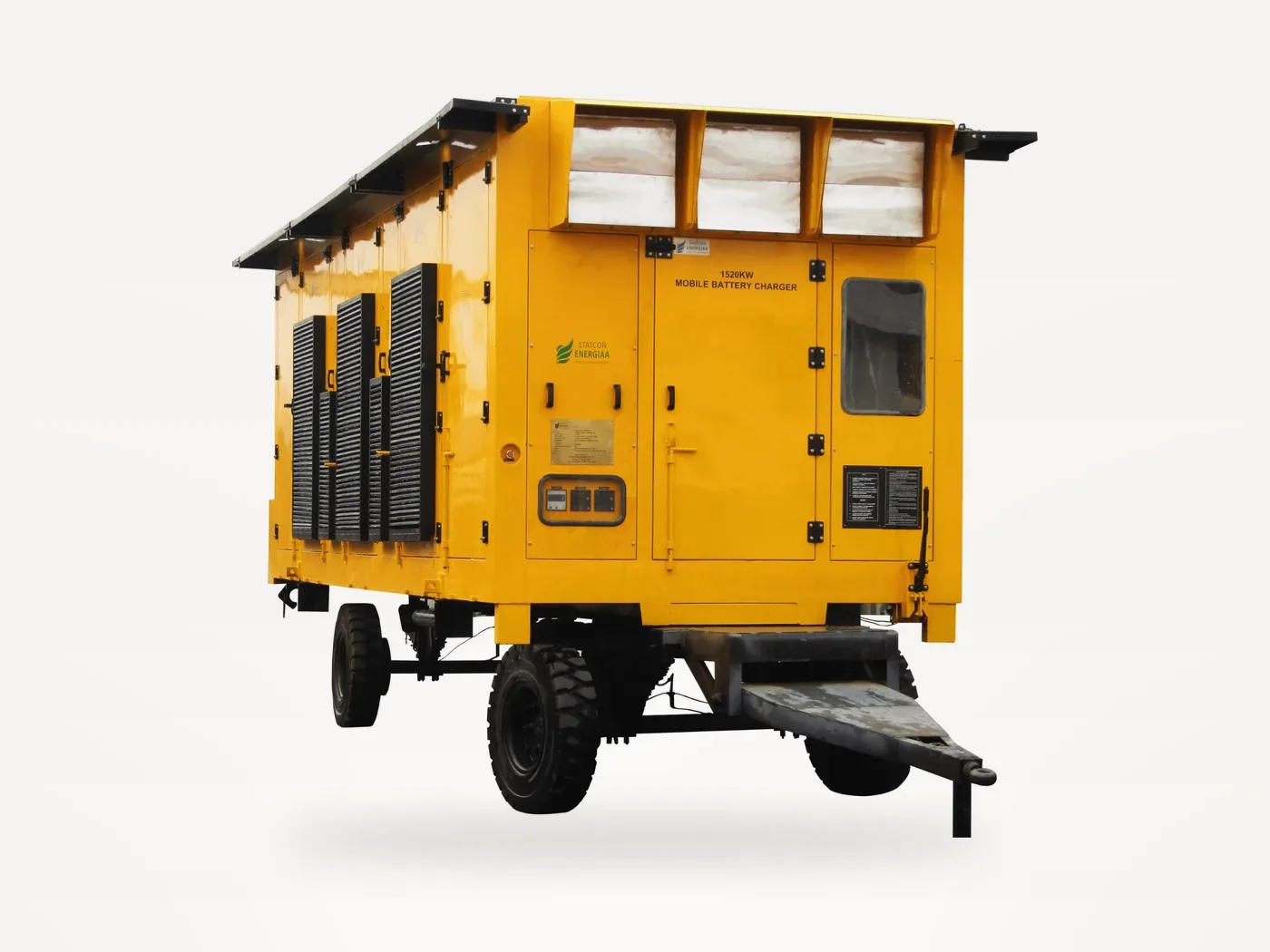
Rectifiers and battery chargers
Mobile rectifier battery chargers
Thyristor-controlled mobile rectifier chargers from 100 kW to 1500 kW for high-capacity and submarine batteries.
100 kW to 1500 kW, 200 V to 600 V DC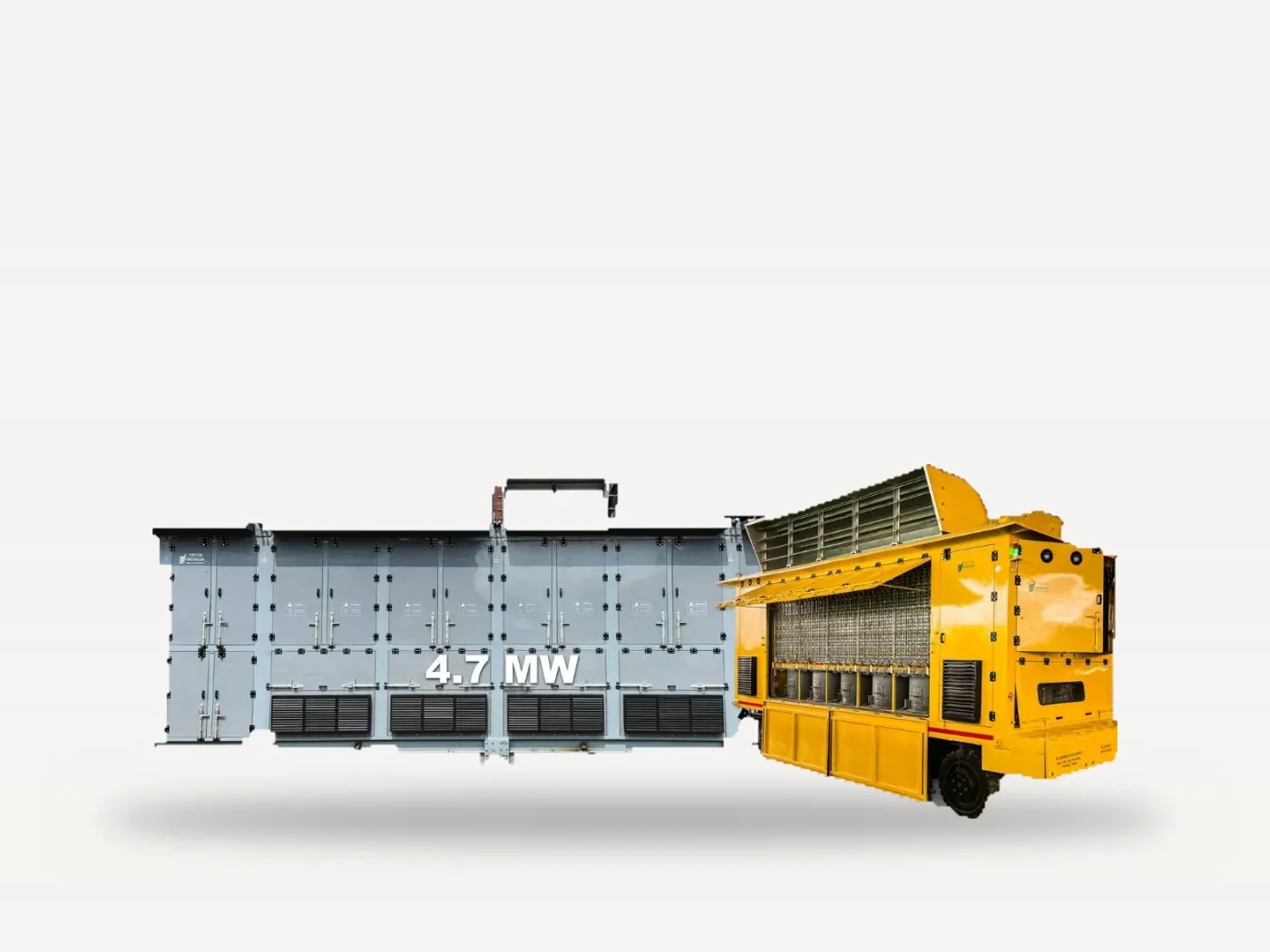
Load banks and test equipment
AC and DC load banks
Resistive AC/DC and resistive-inductive AC load banks up to 4.7 MW for testing ships' power, generators and batteries.
10 kW to 4.7 MW, resistive/inductiveRegulated power supplies
High-power DC supplies
Regulated and unregulated high-current DC supplies, 24 V to 400 V, for aircraft, armoured vehicles and radar.
24–400 V DC, 100 A to 1500 A continuousGet in touch
Request a quote.
Need this configured for your site? Share the voltage, current and site conditions. An application engineer will reply with a configuration.